What Does Your Heart Line Palmistry Meaning in Palmistry? A Complete Guide
What is Your heart line palmistry meaning?
🏮Table of Contents🏮
Introduction
Of all the lines on your palm, the heart line is the one most people notice first — and the one they most want to understand. Running across the upper portion of your palm, this single curved line is believed to hold the key to your emotional world: how you love, how you connect, how you recover from heartbreak, and what kind of partner you are at your deepest level.
In Eastern palmistry — a tradition refined over centuries through classical texts such as Ma Yi Xiang Fa and Shui Jing Shen Xiang — the heart line is not read in isolation. It speaks in conversation with your head line, your life line, the mounts beneath your fingers, and the overall shape of your hand. But understanding the heart line on its own is a powerful first step toward self-knowledge.
In this guide, we’ll walk you through everything you need to know about heart line palmistry meaning: where to find it, how to read its length and curve, what different ending positions signify, and what breaks, chains, or forks in the line reveal about your emotional journey.
Where Is the Heart Line?
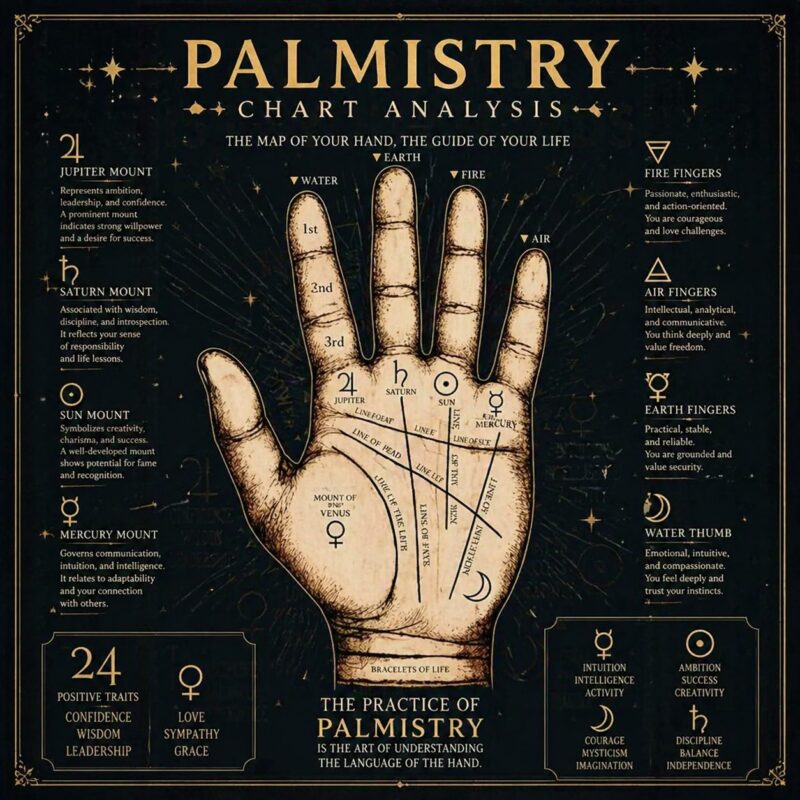
The heart line is the uppermost of the three major horizontal lines on your palm. It begins at the edge of your palm beneath your little finger (the Mercury finger) and travels across the palm toward the index or middle finger side.
To find it easily:
- Hold your palm face-up and relaxed
- Look for the curved line running across the top of your palm, below your fingers
- It sits above the head line (which crosses the middle of your palm) and above the life line (which curves around the base of your thumb)
In Eastern palmistry tradition, men read the left hand and women read the right hand when analysing the heart line for destiny and character. This is the classical “Left for Men, Right for Women” rule that Master Soren follows in every reading.
Heart Line Length: What It Reveals
A Long Heart Line
A heart line that stretches from beneath the little finger all the way to beneath the index finger — or even curves upward between the index and middle fingers — is considered a strong, expressive heart line. People with a long heart line tend to:
- Express emotions openly and with depth
- Invest deeply in relationships, sometimes to the point of intensity
- Value long-term commitment and loyalty above casual connection
- Experience both great love and great heartbreak with equal feeling
A long heart line does not guarantee romantic success — it indicates emotional depth. The quality of that depth depends on the clarity and condition of the line itself.
A Short Heart Line
A heart line that ends beneath the middle finger rather than extending further is considered shorter. People with shorter heart lines tend to:
- Be more self-sufficient emotionally
- Prioritise personal goals and independence alongside relationships
- Express love through actions rather than words
- Need more personal space within partnerships
Neither length is superior. In the Eastern view, the ideal is balance — a heart line that allows for genuine connection without losing the self.
Heart Line Curve: Straight vs. Curved
A Strongly Curved Heart Line
A heart line that curves noticeably upward toward the fingers indicates a warm, expressive, physically demonstrative person. They tend to show affection openly, enjoy physical touch as a love language, and bring enthusiasm to their relationships.
A Relatively Straight Heart Line
A heart line that runs more horizontally across the palm without a strong upward curve suggests a more measured, intellectually-oriented approach to emotions. These individuals often think through their feelings before expressing them, are deeply loyal once committed, but may take longer to open up initially.
Where Does Your Heart Line End? The Three Classic Positions
The ending position of your heart line is one of the most significant details in Eastern palmistry. There are three primary positions, each with a distinct interpretation.
Ending Beneath the Index Finger (Jupiter Mount)
A heart line that terminates beneath the index finger, or curves upward to touch the Jupiter mount, is associated with idealism in love. People with this ending:
- Hold high standards for partners and relationships
- Are drawn to emotional and intellectual connection in equal measure
- May sometimes feel disappointment when reality doesn’t match their romantic vision
- Have the capacity for deeply meaningful, long-lasting partnerships
This is considered a fortunate ending in classical Chinese palmistry — it suggests someone who approaches love with both heart and wisdom.
Ending Between the Index and Middle Fingers
A heart line ending in the space between the index and middle fingers represents a balanced nature. These individuals:
- Balance emotional need with practical judgment
- Are capable of both romance and stability
- Adapt well to partnership dynamics
- Tend to build relationships that are both fulfilling and grounded
In Eastern tradition, this middle position is often seen as the most harmonious — neither too idealistic nor too detached.
Ending Beneath the Middle Finger (Saturn Mount)
A heart line ending beneath the middle finger suggests a person who approaches love with realism and sometimes caution. They:
- Value stability and reliability in a partner
- May be slower to fall in love but deeply committed once they do
- Prioritise practical compatibility alongside emotional connection
- Tend to be loyal and dependable in relationships
This is not a negative sign — it simply speaks to a more grounded, cautious approach to the heart.
Heart Line Quality: What Marks and Features Mean
Beyond length, curve, and ending position, the condition and texture of your heart line carries significant meaning.
A Clear, Deep Heart Line
A heart line that is clearly defined, runs without major interruption, and is a consistent depth indicates emotional clarity, consistency, and resilience. This person tends to have a stable emotional foundation and the capacity to maintain relationships through difficulty.
A Chained or Wavy Heart Line
A heart line that appears chained (like a series of small ovals linked together) or noticeably wavy suggests emotional sensitivity and variability. These individuals feel things deeply and may experience emotional highs and lows more intensely than others. Periods of emotional complexity or relationship uncertainty may be reflected in this pattern.
Breaks in the Heart Line
A clear break in the heart line — where the line stops completely before continuing — can indicate a significant emotional event or turning point. In Eastern palmistry, this is read as a period of disruption in the emotional sphere: a heartbreak, a major relationship transition, or an important shift in how the person relates to love. The recovery and continuation of the line after the break is equally important.
Forks at the End of the Heart Line
A fork at the termination point of the heart line is often considered a positive sign in classical Chinese palmistry. A forked ending suggests versatility — the ability to balance idealism and practicality in love. It may also indicate someone who is naturally empathetic and able to see multiple perspectives in relationship dynamics.
A Double Heart Line
Occasionally, a person’s palm shows what appears to be a second, parallel line running just above or below the heart line. This is sometimes called a “sister line” and is generally interpreted as additional emotional support — either an inner resilience, or a strong bond with another person that provides a stabilising influence.
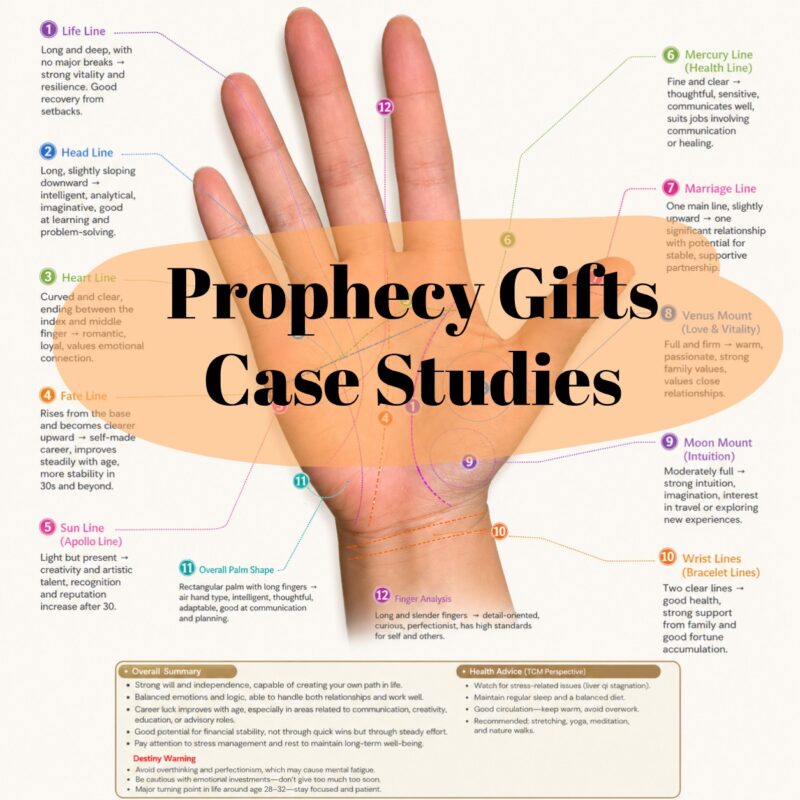
The Heart Line in Relationship to Other Lines
In Eastern palmistry, no line is read in isolation. The heart line’s meaning deepens when read alongside the other major lines.
Heart Line and Head Line Together
The distance between the heart line and the head line can be revealing. A wide gap between the two suggests an independent, open-minded individual who values personal freedom. A narrower gap may indicate someone who is more focused and concentrated in their pursuits — emotionally and intellectually.
When the heart line and head line appear very close together or, in rare cases, merge into a single line (known as a Simian line), this indicates an intensely focused, driven personality — someone whose emotions and thoughts are deeply intertwined.
Heart Line and the Mounts
The mount beneath the finger where your heart line ends adds another layer of meaning. The Jupiter mount beneath the index finger is associated with ambition, leadership, and idealism. The Saturn mount beneath the middle finger is associated with discipline, seriousness, and responsibility. These qualities colour the nature of the heart line’s energy.
What Your Heart Line Cannot Tell You
It is important to approach palmistry with wisdom and humility. Your heart line reflects tendencies, patterns, and potential — it is a map of your emotional landscape, not a fixed decree of your romantic fate.
The same heart line on two different people will play out differently based on their choices, experiences, self-awareness, and environment. In the Eastern tradition, the palm is read as a living document — it changes over time as you grow. The lines on your hand at thirty will not be identical to those at fifty.
Master Soren’s approach is always holistic: the heart line is one voice in a larger conversation. Your head line, life line, fate line, the mounts, and your overall hand shape all contribute to a complete picture.
Free vs. Full Palm Reading: Which Do You Need?
If reading this article has made you curious about your own heart line — and the rest of your palm — there are two ways to explore further.
Start With Our Free Palm Reading
Not sure what your lines mean yet? Our free palm reading online is the perfect starting point. Simply upload a clear photo of your palm, enter your email address, and Master Soren will analyse your heart line, head line, life line, fate line, and sun line — delivering a personalised summary directly to your inbox.
The free reading is ideal if you want a clear, professional overview of your palm’s main features without any commitment.
Ready for the Complete Picture? Upgrade to the Full Destiny Report
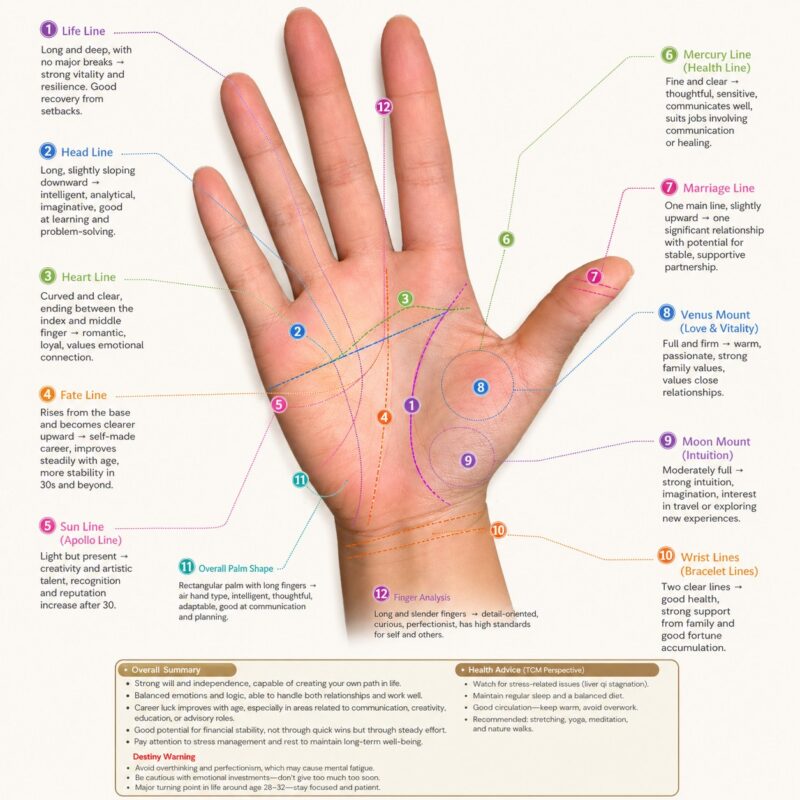
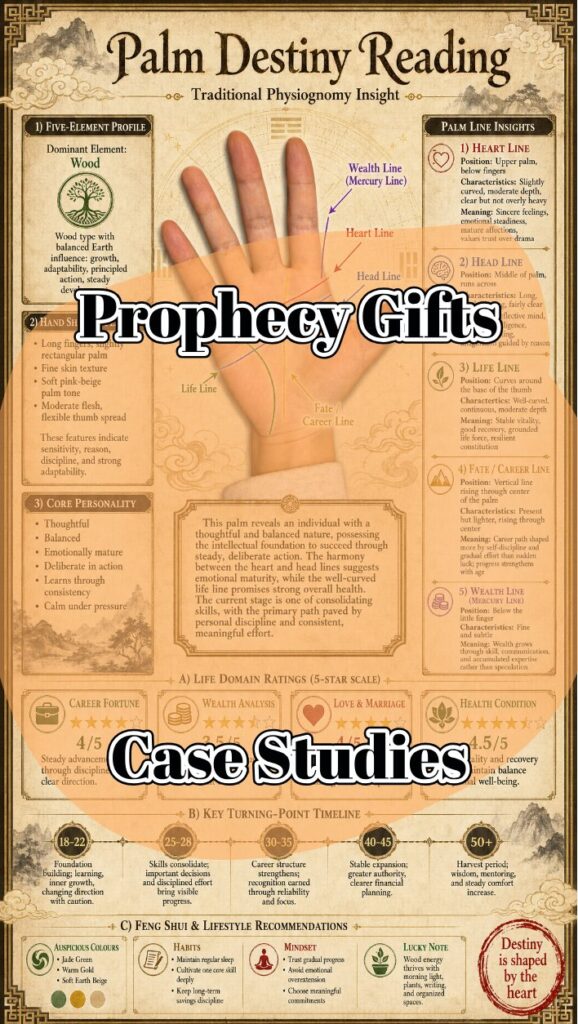
If you want to go beyond the core lines and receive a truly comprehensive analysis, our Palmistry Chart Analysis by Master Soren covers 12 dimensions of your palm — including the Mercury line, Marriage line, Venus and Moon mounts, Five-Element profile, TCM health advisory, key life turning-point ages, and a personalised action guide.
Unlike automated AI tools, Master Soren reads your palm holistically — studying how your lines interact with your mounts and hand shape to produce a deeply personalised report, delivered within 48 hours.
The Full Destiny Report is for those who are ready for clarity — about their relationships, their career, their health, and the path ahead.
Ready to discover what your own heart line reveals? Upload your palm photo and receive your free personalised reading below.
Frequently Asked Questions
In Eastern palmistry, men read the left hand and women read the right hand. This is the traditional rule followed in Chinese palmistry for centuries and the one Master Soren applies in every reading.
Yes. The lines on your palm evolve gradually over your lifetime, reflecting changes in your emotional patterns, experiences, and character. The palm is not a fixed destiny — it is a living map.
A faint or shallow heart line may suggest a more reserved emotional nature or someone who has learned to guard their feelings. It does not indicate an absence of emotion — simply a different way of expressing or processing it.
Not necessarily. A break in the heart line often reflects a significant emotional transition — a period of change, not a permanent disruption. The way the line continues after the break is equally important to read.
Palmistry reflects tendencies and patterns — it is a tool for self-awareness, not a crystal ball. The insights from a palm reading are most valuable when used for reflection and guidance, not as absolute predictions.