
I Ching Reading Online: What to Expect and How It Works
An I Ching reading online is one of the most direct ways to access the oldest continuously practiced divination system on earth — and one of the most misunderstood.
🏮Table of Contents🏮
The I Ching (易經), or Book of Changes, is not a fortune-telling tool in the conventional sense. It does not predict fixed outcomes or hand you a predetermined fate. What it does is something far more sophisticated: it reflects the energetic pattern of your current situation with extraordinary precision, identifies the forces in motion beneath the surface of your question, and offers guidance on how to align your actions with the natural direction of change.
In over a decade of practice integrating Eastern divination with Western human-centered frameworks, I have found the I Ching to be the most honest oracle available — because it never tells you what you want to hear. It tells you what the moment actually contains.
This guide explains exactly how an I Ching reading works, what the hexagrams reveal, what you can expect from a professional online reading, and how to formulate a question that opens the deepest possible channel of insight.

What Is the I Ching?
The I Ching is a Chinese classic text with origins dating back over three thousand years, traditionally attributed to the legendary King Wen of Zhou and later expanded by Confucius. It consists of 64 hexagrams — six-line figures composed of broken (Yin) and unbroken (Yang) lines — each representing a specific energetic pattern or phase of change.
The system is built on a foundational insight that remains as relevant today as it was three millennia ago: everything in the universe is in a constant state of change, and those changes follow recognizable patterns. The I Ching maps those patterns.
Each hexagram carries a name, an image drawn from nature or human experience, a primary judgment, and a set of line statements that address the specific dynamic of each position within the hexagram. A skilled practitioner reads not just the hexagram but the relationship between lines, the movement from one hexagram to another through changing lines, and the deeper question of what the pattern is asking of the person who consults it.
This is why an I Ching reading online from a trained practitioner is categorically different from running your question through an automated hexagram generator. The hexagram is the beginning of the reading — not the reading itself.
How Does an I Ching Reading Work?
The Traditional Method: Yarrow Stalks and Coins
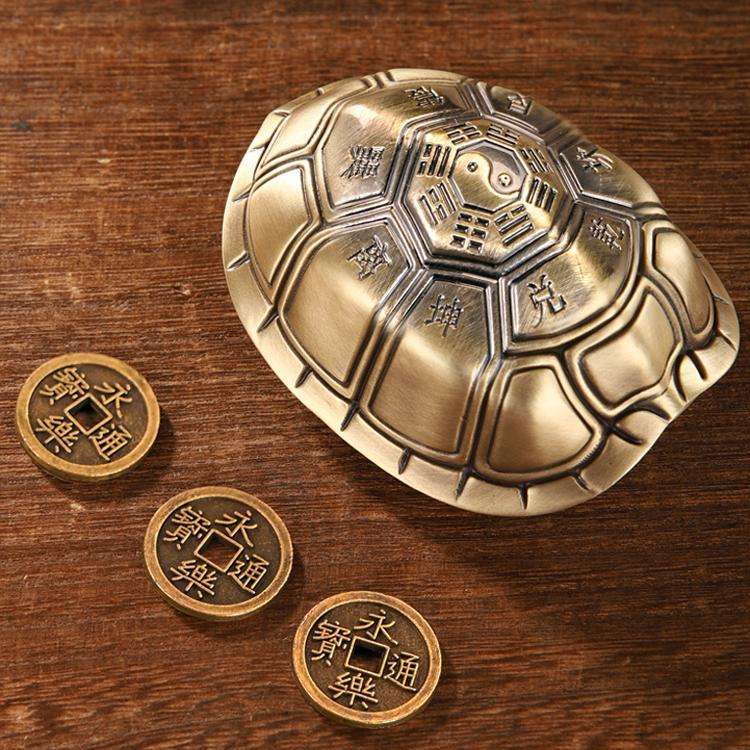
Classically, I Ching hexagrams are generated through one of two methods: the yarrow stalk method, which involves a lengthy and meditative casting process using fifty dried stalks of yarrow grass, or the three-coin method, which uses three coins thrown six times to generate the six lines of the hexagram from bottom to top.
Both methods work on the same principle: the physical randomness of the casting process is understood, within the I Ching framework, not as mere chance but as a reflection of the Qi — the living energetic field — of the precise moment of the question. The moment you cast the coins or arrange the stalks, the universe is already responding.
Changing Lines and the Second Hexagram
One of the most important and frequently misunderstood aspects of I Ching divination is the role of changing lines.
When a cast produces certain results — a heads-heads-heads or tails-tails-tails combination in the coin method — that line is designated as a “changing line,” meaning it is in a state of active transformation. A changing line in the hexagram transforms into its opposite: a Yang line becomes Yin, a Yin line becomes Yang.
This transformation produces a second hexagram — the hexagram that your situation is moving toward. The first hexagram describes where you are now. The second hexagram describes where the energy is flowing. Together, they create a narrative of movement: the current pattern and its natural direction of change.
A reading with multiple changing lines is a reading in rapid flux — the situation is highly dynamic and the forces in motion are significant. A reading with no changing lines describes a stable pattern that is not yet ready to shift.
What the Hexagram Does Not Tell You
The I Ching does not name specific people, dates, or concrete outcomes. It speaks in the language of energy, image, and principle. This is not a limitation — it is the system’s precision. Specific predictions are always subject to the choices made by the people involved. The I Ching addresses the energetic field within which those choices are being made, which is the level at which genuine guidance is most useful.

What Can You Ask the I Ching?
The quality of an I Ching reading is directly shaped by the quality of the question. This is one of the areas where working with a practitioner rather than a generator makes the greatest difference — a skilled reader will help you identify what you are actually asking, which is often different from the question you think you are asking.
Questions That Open Deep Channels
The I Ching responds most powerfully to questions that are:
Specific in context, open in outcome. Rather than “Will I get the promotion?” try “What is the energetic quality of my current position in this workplace situation, and what does the I Ching counsel regarding how I move forward?” The first question asks for a prediction. The second asks for wisdom about how to navigate.
Genuinely uncertain. The I Ching is a tool for navigating genuine uncertainty. If you already know the answer and are looking for confirmation, the reading will often reflect that dynamic back to you rather than provide new insight.
Personally honest. The I Ching responds to the energy beneath the question as much as the question itself. Bringing your genuine concern — not a socially acceptable version of it — produces the most accurate response.
Life Areas Well-Suited to I Ching Consultation
- Career and business decisions — Should I accept this offer? What is the true nature of this partnership? What is the most aligned direction for this project?
- Relationship dynamics — What is the underlying pattern in this relationship? What does this conflict actually contain? What is the most aligned way to approach this conversation?
- Life transitions — What is the energetic quality of this change I am considering? What am I not seeing clearly about this situation?
- Inner guidance — What do I need to understand about my current life chapter? What is the most aligned action available to me right now?
- Timing questions — Is now the right time to move forward, or does the energy counsel patience?
The 64 Hexagrams: A Brief Orientation
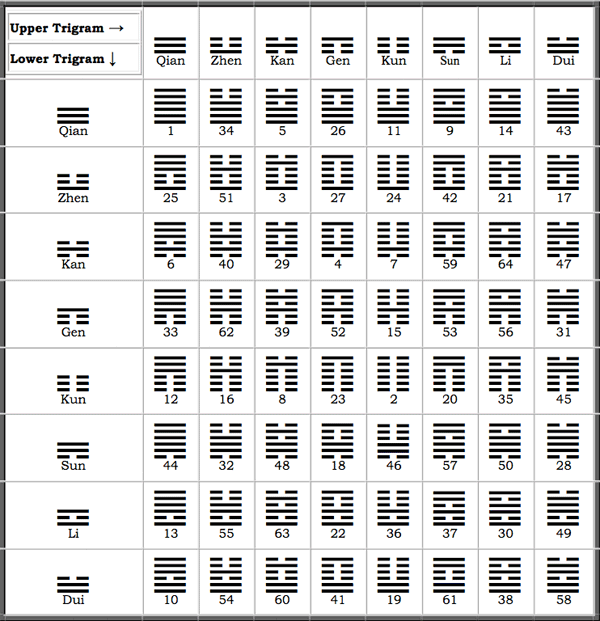
Each of the 64 hexagrams is composed of two trigrams — three-line figures, each representing one of eight fundamental forces in nature:
- ☰ Heaven (乾 Qián) — creative force, strength, leadership
- ☷ Earth (坤 Kūn) — receptive force, nurturing, support
- ☳ Thunder (震 Zhèn) — arousing energy, initiation, shock
- ☴ Wind/Wood (巽 Xùn) — gentle penetration, flexibility, persistence
- ☵ Water (坎 Kǎn) — danger, depth, the abyss and what lies within it
- ☲ Fire (離 Lí) — clarity, illumination, awareness
- ☶ Mountain (艮 Gèn) — stillness, waiting, knowing when not to move
- ☱ Lake (兌 Duì) — joy, communication, exchange
The upper trigram of a hexagram describes the outer situation — the world, the environment, the context. The lower trigram describes the inner situation — the self, the inner resources, the personal response.
Reading the relationship between these two trigrams is the beginning of hexagram interpretation. The six individual lines then add the specific narrative of how the energy moves through the situation from its foundation (Line 1) to its culmination (Line 6).
What to Expect from a Professional I Ching Reading Online with Clara Zhou
The Process
Step 1 — Purchase and Question Submission
After booking your I Ching Divination reading, you will receive an email with a short intake form. You will be asked to submit your question in as much context as you feel comfortable sharing, along with any relevant background that will help me understand the full landscape of your situation.
The more honestly and completely you describe what you are navigating, the more precisely I can interpret the hexagram’s response to your specific circumstances.
Step 2 — Casting and Initial Reading
I cast the hexagram using the traditional three-coin method in a dedicated ritual space, holding your question clearly in mind throughout the casting process. The resulting hexagram — including any changing lines and the second hexagram they produce — is recorded and becomes the basis of your reading.
Step 3 — Deep Interpretation
This is where the work happens. I interpret your hexagram in full — the primary image and its relationship to your question, each changing line and what it reveals about the specific dynamics in motion, the second hexagram and what it tells us about where the energy is flowing, and the overall counsel the reading offers for how to move forward.
I draw on both classical commentary — particularly the Wilhelm-Baynes translation and the original Chinese text — and my own decade of practical experience applying I Ching guidance to real-world situations navigated by real people.
Step 4 — Written Report Delivery
Your reading is delivered as a comprehensive written report — typically 1,200 to 2,000 words — within 5 to 7 business days. The report includes your hexagram identification, a full interpretation of the primary hexagram and its relevance to your question, an analysis of all changing lines, the second hexagram and its significance, and clear, practical counsel on how to work with what the reading reveals.
Step 5 — Follow-Up
One round of follow-up questions is included. If something in the report raises a question or you want me to go deeper on a specific aspect of the reading, simply reply to your report email within 14 days.
What Makes This Reading Different
The I Ching is not difficult to look up. Any of the 64 hexagrams can be found in a book or online in seconds. What is difficult — and what takes years of study and practice to develop — is the interpretive layer: understanding how a specific hexagram speaks to a specific situation, how the changing lines interact with each other, how the movement from one hexagram to another tells a story about the forces in motion in your life.
I have spent over a decade sitting with the I Ching as a living practice — not as an academic exercise but as a genuine navigational tool for my own life and the lives of the people I work with. Every reading I deliver is an act of careful, honest interpretation — not a generic hexagram description applied to your question, but a genuine attempt to hear what the oracle is saying to you specifically.
I Ching and BaZi: Complementary Systems
One of the questions I am most frequently asked is how the I Ching relates to BaZi — the Four Pillars of Destiny system that forms the backbone of our consultation practice at Prophecy Gifts.
The two systems are complementary but operate on different levels.
BaZi is a destiny analysis system. It maps the fixed energetic blueprint of your life based on your birth date and time — revealing the structural patterns of your wealth, relationships, career, and health across your entire life span and current luck cycle. BaZi answers the question: What is the nature of this life, and what are its characteristic timing patterns?
I Ching is a situational guidance system. It responds to a specific question in a specific moment — revealing the energetic quality of a current situation and offering counsel on how to navigate it. I Ching answers the question: What does this particular moment contain, and what is the most aligned response available to me right now?
Used together — BaZi for the structural understanding of your life’s energetic blueprint, I Ching for situational guidance in specific moments of decision or uncertainty — they create an extraordinarily complete navigational system.
If you have not yet explored your BaZi chart, our Free Five Elements Calculator identifies your Day Master element instantly. For a complete BaZi analysis, Master Xuan’s BaZi Consultation provides a full written reading covering your destiny blueprint, current luck cycle, and personalized recommendations.
How to Prepare for Your I Ching Reading
Before You Submit Your Question
Spend a few minutes in quiet before writing your question. Not meditation necessarily — simply a few moments of genuine stillness in which you let the real question surface rather than the socially presentable version of it.
Ask yourself: What am I actually uncertain about? What do I most need to understand right now? What am I afraid the answer might be?
That last question is often the most useful. The thing we most fear hearing is frequently the thing we most need to examine.
Write Your Question with Context
Do not simply write “Will my business succeed?” Write the situation: what you are building, where you are in the process, what specific decision or uncertainty has prompted you to consult the I Ching right now, and what outcome you are hoping for versus what you are afraid of.
Context is not extraneous information — it is the energetic field within which your hexagram will be interpreted. The more honestly you describe it, the more precisely the reading can speak to what you are actually navigating.
Receive the Reading with Openness
The I Ching has a well-earned reputation for honesty. It will not always confirm your preferred path. Sometimes it will counsel patience when you want action, stillness when you want movement, or a fundamental reexamination of your premise when you were hoping for a green light.
When this happens, I encourage you to sit with the reading for several days before drawing conclusions. The I Ching’s most challenging readings are frequently its most valuable ones — because they address the thing beneath the surface question that actually needs attention.
Frequently Asked Questions
An I Ching reading online is a professional divination consultation conducted remotely, in which a trained practitioner casts and interprets an I Ching hexagram in response to your specific question. At Prophecy Gifts, your reading is conducted by Clara Zhou using the traditional three-coin method, with a comprehensive written interpretation delivered to your email within 2 business days.
The I Ching's accuracy operates on a different register than factual prediction. It is consistently precise in its description of the energetic pattern of a situation — the forces in motion, the underlying dynamics, the direction of change. Many people find it startlingly accurate in this sense. It is less suited to producing specific factual predictions about dates, names, or concrete outcomes, which is not what the system is designed to do.
Each reading is focused on a single question or situation. This is not a limitation — it is what allows the reading to go deep. A reading that addresses multiple questions simultaneously produces a scattered interpretation that serves none of them well. If you have multiple significant questions, multiple readings are recommended.
You do not need to hold any particular belief about the metaphysical mechanism of the I Ching for a reading to be useful. Many people who approach the I Ching skeptically find that the readings produce insight regardless — because the process of formulating a genuine question and then receiving a thoughtful, non-obvious response creates conditions for reflection that produce clarity on their own terms.
Both systems use a structured framework to generate a response to a question, but the frameworks are entirely different. Tarot uses a 78-card deck with imagery rooted primarily in Western esoteric traditions. The I Ching uses 64 hexagrams rooted in Classical Chinese philosophy, with a textual commentary tradition extending back three thousand years. The I Ching tends to be more philosophical and less imagistic than tarot, speaking in the language of natural forces and principles of change rather than archetypal figures and scenes.
The I Ching does not predict a fixed future — because within its philosophical framework, the future is not fixed. It is shaped by the choices of the people involved and the natural direction of the energetic forces in motion. What the I Ching predicts is the direction of change if the current pattern continues — and it offers guidance on how to align your choices with the most beneficial available direction.
Clara Zhou is the Founder of Prophecy Gifts and a practitioner of Liu Yao Divination (I Ching Hexagrams) with over a decade of experience integrating Eastern oracular wisdom with Western human-centered frameworks. Born into a family steeped in Taoist rites, she spent a decade in Seattle bridging Eastern heritage with Western sensibilities before founding Prophecy Gifts.
Ready to consult the oracle? Book your I Ching Divination reading with Clara Zhou →